

Reviews
Symbol Path Logic Puzzle offers a refreshing take on the matching genre. The core rule of avoiding crossed lines forces players to think spatially and plan ahead. The visual design is bright and uncluttered, making long sessions easy on the eyes. Progression feels natural, with puzzles that grow more intricate without becoming frustrating. It is an excellent choice for anyone seeking a low-stress mental workout that fits into short breaks or extended play.
About this game
Core Connection Mechanic
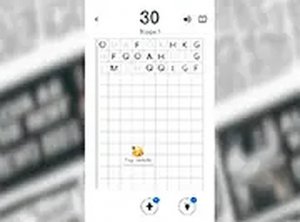
The central activity involves selecting a symbol on the board and drawing a line to its identical partner. The critical rule is that no drawn line may cross or overlap another. This single constraint transforms a simple matching task into a spatial reasoning exercise. Players must think several moves ahead to ensure all pairs are linked while covering every empty cell on the grid. The rule set is minimal, making it easy to start, but the puzzles reward strategic foresight.
Level Layout and Progression
Each puzzle presents a unique arrangement of symbols scattered across a grid. Early levels feature straightforward placements with many open paths, allowing players to learn the mechanics. As players advance, the layouts become denser, with symbols positioned in ways that demand more intricate routing. The difficulty curve is gentle, introducing complexity gradually so that players build skills naturally. This design keeps the experience fresh without sudden spikes in challenge.
Visual Style and Accessibility
The game uses a bright and cheerful color palette that makes the grid easy to read and interact with. Symbols are distinct and clearly visible, reducing eye strain during extended play. The interface is clean, with intuitive controls that work well on both desktop computers and mobile devices. A full-screen option is available for those who prefer an immersive view. This thoughtful design makes the game accessible to players of all ages and experience levels.
Strategic Approaches
Successful players often start by scanning the entire board to identify pairs that are close together or located near the edges. Connecting these early can open up space for more complex links. Working from the outer boundaries inward is a common tactic to avoid blocking central paths. Since multiple solutions usually exist, experimenting with different sequences is encouraged. Taking a short break when stuck often provides a fresh perspective that reveals new possibilities.
Compatibility
✅ Works on PC & Mobile | Recommended: Chrome / Safari / Edge
Faq
Is Symbol Path Logic Puzzle free to play?
Yes, the game is completely free to play online. There are no hidden charges or subscription fees. You can access it directly through your web browser on both desktop and mobile devices.
Can I play Symbol Path Logic Puzzle on my phone?
Yes, the game is designed to work on mobile devices. The controls are touch-friendly, and the grid scales to fit smaller screens. A full-screen option is also available for a more focused experience.
What happens if I make a wrong connection?
If you draw a line that crosses another or fails to cover all cells, the puzzle will not complete. You can usually undo or restart the level to try a different approach. The game encourages experimentation.
How many levels does Symbol Path Logic Puzzle have?
The exact number of levels is not specified, but the game offers a progressive series of puzzles with increasing complexity. New layouts are introduced regularly to keep the challenge engaging.
Is there a time limit for each puzzle?
No, there is no time limit. You can take as long as you need to plan your connections. This makes the game suitable for relaxing sessions where you can focus without pressure.
Does the game require an internet connection?
Since it is a free online game, an internet connection is required to load and play. However, once a puzzle is loaded, it may run without constant connectivity, depending on the implementation.






Comments
0 comments