
Reviews
Orbital Guard excels by removing unnecessary elements and focusing on core strategy. The resource management creates tense decisions, and the escalating difficulty keeps each session fresh. Its simplicity is its strength, making it accessible yet deeply engaging for fans of the genre.
About this game
Core Gameplay Loop
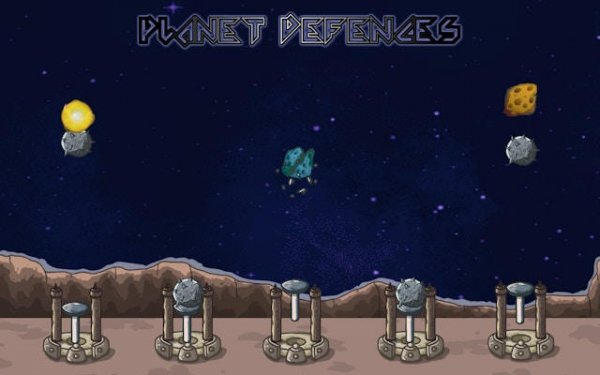
Orbital Guard focuses on a single, intense objective: protect your planet from an endless meteor storm. Unlike traditional tower defense games, there are no levels to complete or narratives to follow. The game presents a pure test of strategic decision-making. Players must construct and manage a network of defensive towers to intercept incoming threats. The challenge lies in adapting to an ever-increasing onslaught, with each session demanding quick thinking and careful resource allocation.
Resource Management & Upgrades
Energy is the primary resource in Orbital Guard. It accumulates gradually over time, requiring players to spend wisely. Building a balanced network of towers early is essential, but upgrading those that handle the most traffic becomes crucial as the storm intensifies. Sometimes, saving energy for a key upgrade is more effective than constructing new towers immediately. This creates a constant tension between expansion and reinforcement.
Strategic Adaptation
As the meteor storm grows stronger, players must regularly reassess their defensive layout. Gaps in coverage need to be filled, and weak spots require reinforcement. The game rewards those who can quickly adapt their strategy to changing conditions. There is no single winning formula; success comes from understanding the patterns of the storm and making smart, timely decisions.
Endless Challenge & Replayability
Orbital Guard offers an endless gameplay experience that increases in difficulty over time. The primary goal is to survive as long as possible against an unrelenting assault. Players can compete against their own high scores, adding a layer of replayability. The focus is on ability-based challenge, rewarding smart planning and quick adaptation without distractions from story or level progression.
Compatibility
• OS: Windows 10+, macOS 11+, iOS 14+, Android 10+
• Browsers: Chrome 100+, Safari 15+, Edge 100+, Firefox 100+
• Not compatible with Internet Explorer
Tested on real devices ✅ works as expected
Faq
Is Orbital Guard suitable for beginners to the tower defense genre?
Yes. The game's core mechanics are straightforward: place towers and manage energy. The lack of complex story or level systems makes it easy to pick up. New players can learn the basics quickly, while the increasing difficulty provides a satisfying challenge for veterans.
How long does a typical game session in Orbital Guard last?
Session length depends entirely on player skill. Since the game is endless, a round can last from a few minutes to much longer as the storm intensifies. There is no set time limit, allowing for short bursts of play or extended strategic sessions.
Does Orbital Guard have any in-app purchases or ads?
The input does not specify monetization details. Many arcade-style games of this type may include optional ads or purchases, but this is not confirmed for Orbital Guard. Check the app store listing for specific information.
What platforms is Orbital Guard available on?
The input does not specify platforms. Given its arcade and strategy nature, it may be available on mobile devices, PC, or web browsers. Verify availability on your preferred platform through official sources.
Can I pause the game in Orbital Guard to plan my next move?
The input does not mention a pause feature. Many real-time strategy games of this type do not allow pausing, as the challenge relies on quick thinking. However, this is not confirmed. Check the game's settings for specific options.
Are there different types of meteor storms in Orbital Guard?
The input describes an endless meteor storm that intensifies over time. It does not specify different storm types. The challenge likely comes from the increasing density and speed of meteors, requiring adaptive strategies rather than distinct storm varieties.








Comments
0 comments